🚚 Free Delivery on Orders Above Rs. 2,500 | 📦 Delivery Charges Rs. 250 on Orders Below Rs. 2,500
🚚 Free Delivery on Orders Above Rs. 2,500 | 📦 Delivery Charges Rs. 250 on Orders Below Rs. 2,500
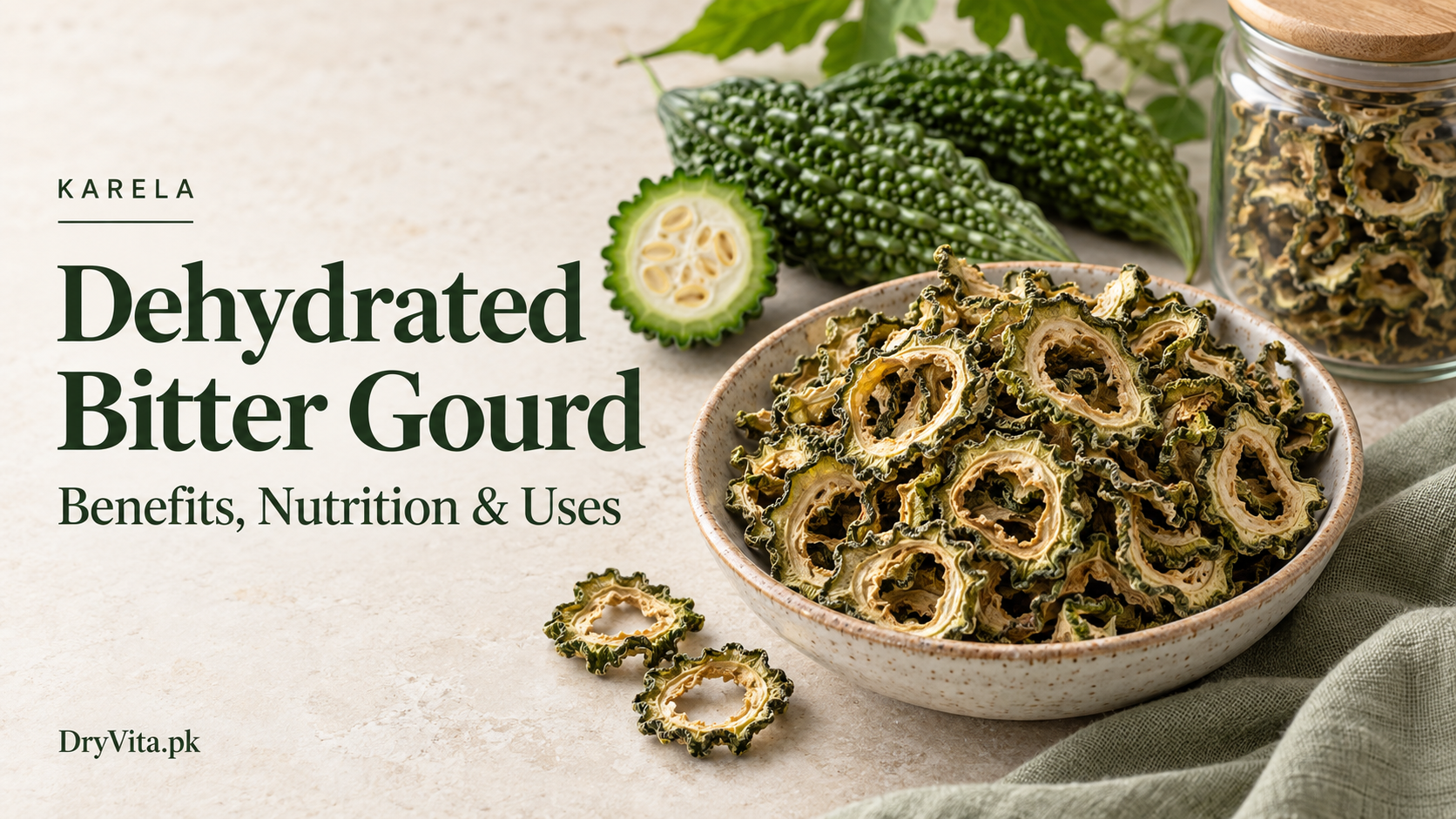
What Is Bitter Gourd, Also Known as Bitter Melon or Karela? Bitter gourd is a vegetable (also called bitter melon) with a distinct bitter taste that packs incredible nutrition. It is widely used in Asian cuisine and has been part of environmental diets for thousands of years.
Bitter gourd is not long-lasting, so most people dehydrate it for preservation. Dehydration takes out the water present within the vegetable, allowing it to last longer while retaining many of its nutrients.
Dehydrated bitter gourd can be used in various ways, like tea infusion, food addition, and powder conversion. This guide discusses dehydrated bitter gourd, how it is made, its benefits and nutrition, and its common uses.
Dehydrated bitter gourd is nothing but fresh karela dehydrated to get rid of the excess moisture.
The removal of water also lightens the vegetable, reduces its size, and makes it easier to store for a longer period of time. This process ensures that bacteria and fungus cannot multiply, which lasts for many months until it is used.
Bitter gourd can be dried and stored to be used as needed. It can also be soaked in water to rehydrate some of its original texture before use.
Dehydration is easy once you prepare properly in order to keep up the quality and flavor.
Step 1: Select fresh and healthy bitter gourd. Vegetables should be crisp and green—not:
Dark spots
Damage
Soft areas
Signs of spoilage
Dried products made from freshly sheared bitter gourd are of superior quality.
Bitter gourds are cleanly washed with fresh water to eliminate:
Dirt
Dust
Surface impurities
Cleaning is a step for the final product is clean and not toxic.
After washing, the bitter gourd is chopped finely.
The seeds and the inner white part are usually removed, as they can contribute to bitterness. It has been proven that thin slices dry quicker and more evenly than thicker pieces.
Some people use simple steps like these to lessen the bitterness before they dry.
Soaking slices in salt water
Sprinkling salt and keeping aside for some time
Lightly boiling before drying
This can lead to the final product feeling more palatable
The prepared bitter gourd slices are sun-dried or dried at room temperature, through natural air drying or hot air drying.
Method-wise, they are left in the sunshine until extra moisture has evaporated.
A food dehydrator dries and removes moisture evenly using controlled heat and airflow.
Bitter gourd can be dehydrated in the oven on low heat.
They are all used to try to take water out of the animal or vegetable but preserve the unique qualities of that animal or vegetable.
Finally, the bitter gourd slices are packed in airtight containers or moisture-proof packaging after complete drying.
Storing them properly also helps protect against:
Moisture
Mould
Loss of quality
Bitter gourd is embedded with tons of essential nutrients. Here are some key ones:
Fiber
Vitamin C
Antioxidants
Minerals
Plant-based compounds
This is because dehydration removes water, which makes nutrients in dried bitter gourd more concentrated than those in fresh bitter gourd.
There are many natural nutrients and plant compounds in dehydrated bitter gourd, which can be useful for human health. While water is lost in the drying process, a range of beneficial nutrients remain, making dried bitter gourd a practical solution for everyday applications.
Bitter gourd is also known for traditionally promoting healthy blood sugar levels. It has natural metabolites that could serve to assist the body in controlling glucose properly. Otherwise, those on diabetes medication should contact a healthcare professional before regularly using it.
Thus, bitter gourd is rich in dietary fiber, which helps you maintain good digestive health. Fiber supports regular bowel movements and may aid in overall digestive health.
Bitter gourd is full of antioxidants, which also provide protection against free radicals attacking and damaging the cells in your body. Antioxidants in the diet support wellness.
Naturally, dried bitter gourd has fewer calories, and it additionally contains fiber, which helps you feel satisfied. This could help promote healthy eating habits and weight management goals.
Vitamin C and other beneficial compounds abound in bitter gourd, supporting normal immune system function and health maintenance.
Bitter gourd is found to be rich in antioxidants and vitamins, which may help keep skin healthy by protecting the skin cells against oxidative stress.
Bitter gourd has plant-based nutrients and fiber, which, when incorporated with a few healthy lifestyle choices, may prove beneficial for your heart as well.
Bitter gourd has a history in cultures around the world for supporting liver wellness. The antioxidants might help protect liver cells by reducing oxidative stress.
The compounds and fiber found in bitter gourd may provide aid to maintain balanced cholesterol levels as part of a healthy dietary regimen.
Dehydrated bitter gourd is full of vital nutrients, such as
Fiber
Vitamin C
Minerals
Antioxidants
Plant compounds
Those nutrients aid with general bodily functions.
Bitter gourd provides eye-supporting minerals, antioxidants, and vitamin A-related compounds that may aid in the protection of vision.
Bitter melon has some extracts that are believed to assist the body in counteracting inflammation and supporting overall health.
Bitter gourd contains natural compounds that can assist the body’s natural metabolic functions, including how we use energy.
A major advantage is that dehydrated versions can be stored for longer periods of time and provide many of the natural characteristics you would expect from fresh karela.
Herbal tea is made by boiling dried bitter gourd slices in water.
There are lots of people who drink this tea as a traditional wellness routine.
Dried bitter gourd may be consumed with:
Curries
Soups
Stir-fried dishes
Prior to cooking, it can be soaked to soften the texture.
Dried bitter gourd can be pulverized into powder form and mixed into various preparations.
To find out more, all products corresponding to bitter gourd extracts are thought of as traditional herbs along with their wholesome-produced material.
How to Store Dried Bitter Gourd: This will aid in maintaining the dried bitter gourd for a longer period of time.
Put it in a container that keeps it airtight.
Keep it away from sunlight.
Avoid moisture.
Use dry spoons or utensils.
Storing it appropriately helps you to maintain the flavor and quality.
Most individuals are safe when they are fed it. But high dosages or concentrates might not be appropriate for all.
Here are some individuals who need to take extra care:
Pregnant women
People using blood sugar medicines
People with specific health conditions
Bitter gourd supplements are safe to use, but it is always recommended to either consult a doctor before using them or read the instructions on the label carefully.
Dehydrated bitter gourd is fresh karela that has been dried to remove water, making it easier to store and use.
When stored properly in an airtight container, dried bitter gourd can last for several months.
No, dehydration mainly removes water. Many natural nutrients and compounds remain, although the amount can depend on the drying method.
You can slice fresh bitter gourd and dry it using sunlight, an oven, or a food dehydrator until all moisture is removed.
Yes, dried bitter gourd slices can be boiled in water to prepare bitter gourd tea.
Yes, the bitter taste remains because bitterness is a natural part of bitter gourd.
You can reduce bitterness by soaking slices in salt water or lightly boiling them before dehydration.
Because it is low in calories and contains fiber, it may support a healthy diet.
Most people can consume it as food, but people with health conditions or those taking medicines should ask a doctor first.
Fresh bitter gourd contains more water and spoils quickly, while dehydrated bitter gourd lasts longer and is easier to store.
Karela is a bitter vegetable that also has a lot of health benefits, and using dehydrated bitter gourd (karela) makes it easy to consume this vegetable in the form of dehydrated chunks any time of year. This makes it easy to store and use and keeps most of its natural nutrients while removing moisture during the drying process for teas, cooking, and powders.
The fiber, antioxidants, and other important plant compounds in bitter gourd mean that dehydrated bitter gourd can be a great way to add to a balanced diet. But it must be taken appropriately, particularly by those managing medical conditions or taking medications.